

How Stephen Curry Wandered from Anakin Skywalker to Darth Vader
Contributed by: Miki (Cadre ACP)
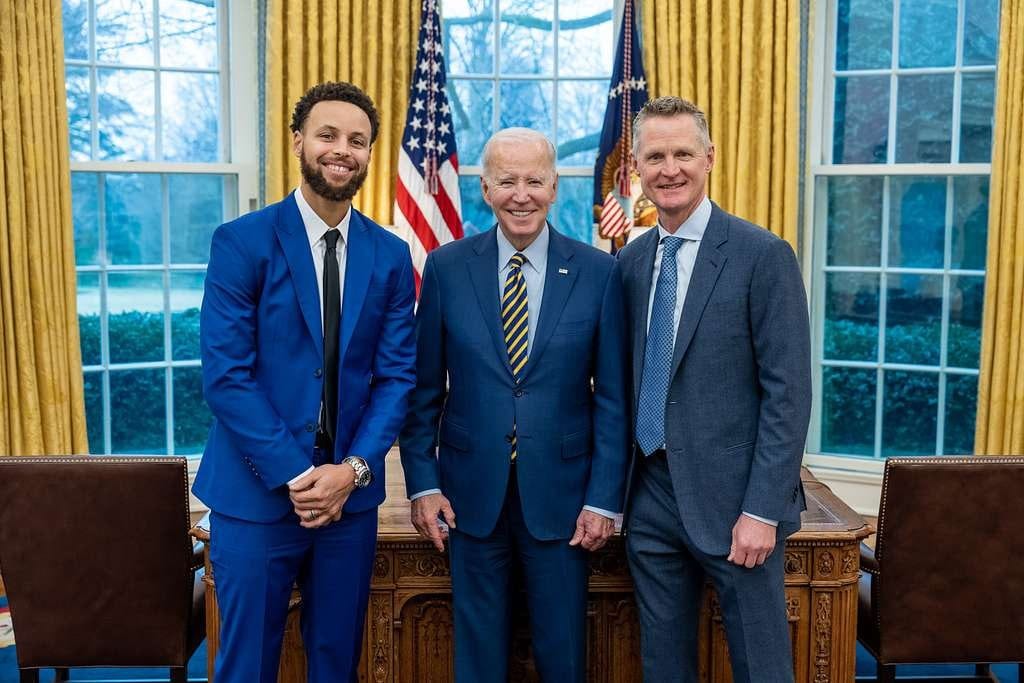
A recent article published by The Grayzone reports on Stephen Curry’s business ties and financial investments in technology companies connected to former Israeli military intelligence personnel. This news came as a surprise to many, especially since Curry has a reputation for being outspoken on social justice issues.
Endorsement deals with major companies like Chase, Rakuten, Fanatics, JPMorgan Chase, Callaway Golf, CarMax, Panini, Google, Subway, Brita, and Simplicity apparently have not been enough for him. Investment in Zafran Security, a tech startup led by former Israel Defense Forces operatives, has also been added to the portfolio, further expanding Curry’s range of business ventures.
What is more surprising is not that an NBA superstar can be politically inconsistent or even hypocritical, but that many people still have not come to terms with a deeper reality: the same forces that shape the rest of society are also found beneath the glamour and spectacle of professional sports.
The $132 Billion Machine
The NBA generated a record $11.3 billion in revenue during the 2023-24 season, continuing its strong post-pandemic recovery. At the same time, the 30 teams in the league are worth about $132.8 billion altogether, showing how massive and valuable the league has become globally. Every aspect of the league—from the games themselves to the players and the branding—is organized to maximize revenue.
The sponsorship world around the NBA is massive, featuring:
More than 1,700 brands.
Over 2,600 deals including team partnerships and player endorsements.
A heavy presence on social media platforms like Instagram, TikTok, and X.
Much of the recent growth is coming from industries like technology, healthcare, and cars, which are spending more to be part of the league.
The Golden State Warriors, in particular, blend sports with Silicon Valley-style thinking. Under owner Joe Lacob, the team is run more like a startup than a traditional sports franchise, focusing on data-driven decision-making and a corporate culture that mirrors a tech company.
The Fan as Idealist
Deep down, most fans understand that professional sports are driven by profit, yet they still hold on to the belief that the game is about teams competing and athletes striving to win. A sports fan is an idealist at heart. In Sacramento, tens of thousands of fans show their loyalty to the Kings, insisting every October that “this is our year,” despite evidence to the contrary.
Unlike the routine grind of everyday life, professional sports are filled with redemption arcs and miracles. As Ljubodrag Simonović writes:
“A sports fan is ‘lifted out of everyday dullness by an athlete in whose dribbling and drive toward the goal he recognizes his own life path... What an adventure for a person who exists like a tiny grain, mercilessly tossed by the winds of history, who, by identifying with the unattainable, seeks to reach his own social worth...’”
The Path to the Dark Side
Professional athletes may start out like the fans who follow them, driven by a love of the game. Early in their careers, they are much like a young Jedi guided by values such as service and balance. But as success grows, so do the pressures of fame and the fear of loss. That’s when “Emperor Palpatine-like” figures step in, whispering, “Why just play the game when you can own it?”
Just like Anakin Skywalker, who sought more control and certainty, Stephen Curry likely sees good reasons behind each new corporate deal: security for his family and his future. However, the shift from Anakin to Vader happens slowly. Eventually, one might find themselves presenting as a voice for social justice while simultaneously investing in entities connected to systems of apartheid.
In professional sports, the capitalist system reduces everything to profit. Even though athletes drive the machine, they are pushed into serving a fixed goal where they can be replaced at any moment by media companies or corporate sponsors. Under these conditions, athletes are reduced to tools for profit.
If this is simply how profit-driven sports work, why act shocked when a superstar follows that logic to its harshest conclusions?
Works Cited
Ljubodrag Simonović. Profesionalizam i/li socijalizam. Mladost, Beograd, 1985.
SponsorUnited. “NBA Marketing Partnerships Report 2024-25.”
Sports Value. “NBA Teams Surpassed US$ 11.3 Billion in Revenue in 2024; Total Valuation Reached US$ 132.8 Billion.”
The Grayzone. “NBA star Stephen Curry’s ties to Israeli intelligence exposed.”
The New York Times (The Athletic). “Warriors in the Arena Where Silicon Valley Merges With Steph Curry and Co.”