

Start Growing Food in Your Community
Why Now Is the Time to Start a Victory Garden

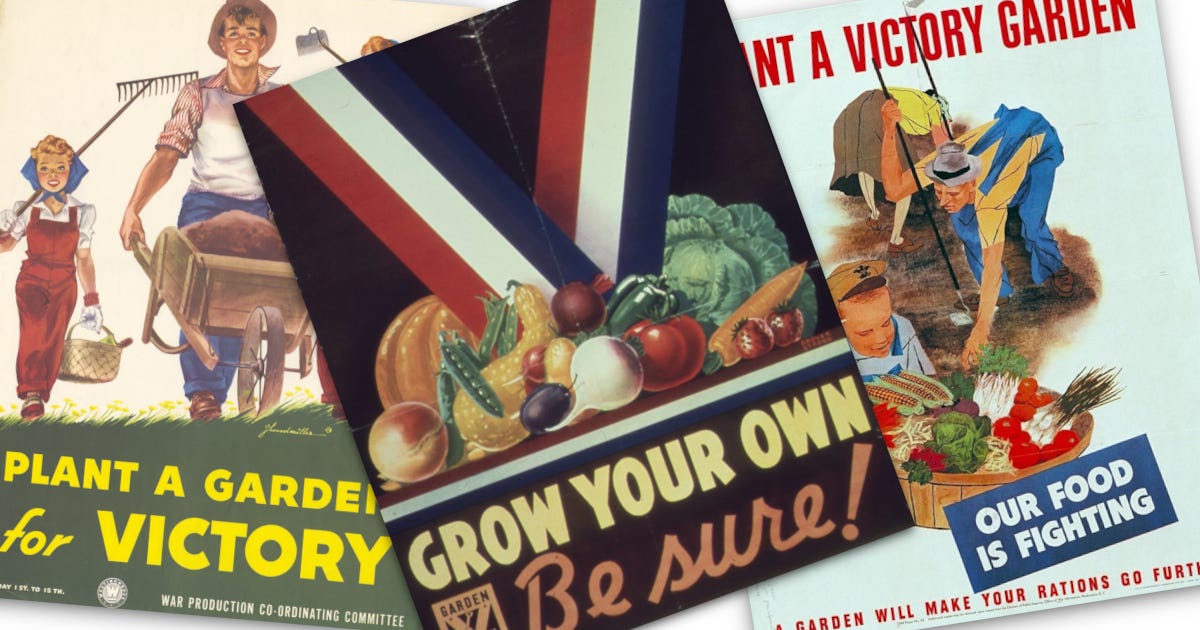
The price of eggs, bread, and produce has been impossible to ignore at the checkout line lately. For many families, grocery bills have become one of the most stressful line items in the monthly budget. But what if part of the solution was sitting right outside your back door? The American Communist Party (ACP) is helping people rediscover an age-old tradition that helped communities survive some of history’s hardest times — the victory garden. And the good news is, you don’t need to be a farmer or have a sprawling piece of land to get started.
Victory gardens first took root during World War I, continued through the Great Depression, and reached their peak during World War II, when the U.S. government encouraged citizens to grow their own fruits and vegetables to reduce pressure on the public food supply. At their height, an estimated 20 million victory gardens were producing roughly 40% of the nation’s vegetables. These weren’t just practical measures, they were a symbol of community strength, resilience, and collective purpose. Today, as grocery prices climb and supply chains remain unpredictable, that same spirit is more relevant than ever.
Let’s talk dollars and cents. A single packet of tomato seeds can cost as little as two or three dollars and yield dozens of pounds of tomatoes over a growing season. The cost of tomatoes at the grocery store run a two or three dollars for one single tomato. Leafy greens like lettuce and spinach are among the easiest crops to grow and among the most expensive to buy. Studies have shown that a well-maintained home garden can save the average family hundreds, even thousands, of dollars per year in grocery costs. When you factor in the quality and quantity of food you can produce in even a small raised bed or container garden, the return on investment is remarkable.
Beyond the savings, growing your own food means you are in control. You decide what goes into the soil, what touches your plants, and when your food is harvested. No more wondering whether your strawberries were sprayed with chemicals you can’t pronounce, or whether your spinach traveled 1,500 miles before landing on your plate. Homegrown produce is picked at peak ripeness, which means it tastes better and delivers more nutritional value than anything traveling in a refrigerated truck. Once you’ve tasted a tomato still warm from the vine, it’s hard to go back.
Most of us remember the unsettling feeling of walking into a grocery store during a supply chain disruption and finding bare shelves where bread, canned goods, and fresh produce used to be. Those moments were a wake-up call for millions of Americans. A victory garden may not replace your entire food supply, but it will provide a meaningful buffer during uncertain times. When you have a garden producing zucchini, squash, beans, potatoes, corn, tomatoes, and herbs, you are less vulnerable to the price spikes and shortages that ripple through the corporate food system. That kind of self-reliance is not about paranoia; it’s about being prepared and empowered.
The victory garden story gets even better. Gardens have a funny way of producing more food than one household can eat on its own. That surplus zucchini, those extra tomatoes, and the overflowing herb garden don’t have to go to waste; they can become the foundation of something truly special in your neighborhood. When you bring a basket of homegrown vegetables to a neighbor, you aren’t just sharing food. You are building trust, starting conversations, and creating connections that strengthen the fabric of your community.
Imagine a block where five families each grow something a little different. Suddenly, those five families have access to a diverse, locally grown harvest that none of them could have achieved alone. This is the natural evolution of the victory garden spirit: from individual effort to collective abundance. Community gardens, neighborhood produce swaps, and local food sharing networks are all growing in popularity, and they all start with someone deciding to put a seed or potato in the ground.
One of the biggest misconceptions about gardening is that you need a large yard, expensive equipment, or a lifelong green thumb to be successful. The truth is, meaningful food production can happen in a five-gallon bucket on an apartment balcony, in a small raised bed on a patio, or in a modest patch of backyard soil. Tomatoes, peppers, lettuce, radishes, green onions, and herbs are all well-suited to small-space gardening. Starting small and building your knowledge season by season is the approach most successful gardeners take. You don’t have to do everything at once. You just have to begin. And the American Communist Party wants to help.
When one person in a neighborhood starts a garden, something interesting tends to happen. Curiosity spreads. Neighbors ask questions. Kids get involved. People start sharing seeds, tips, and harvests. What begins as one family’s effort to cut grocery costs quietly becomes a neighborhood movement. This is exactly the kind of grassroots momentum that has the power to reshape how communities think about food, resilience, and connection. A single raised bed can plant the seed — pun intended — for something much larger than itself.
The challenges we face today — rising food costs, uncertain supply chains, and a growing sense of disconnection from our neighbors and our food — are real. But so are the solutions available to each of us. A victory garden is not a radical act. It is a practical, proven, and deeply human response to uncertainty. It puts food on your table, money back in your pocket, and goodwill into your community. Generations before us understood this. Now it’s our turn.
ACP Is Here To Help
You don’t have to figure it out alone. The American Communist Party is here to help you take that first step, whether you’re a first-time gardener with no idea where to begin or someone looking to expand an existing garden and connect with others in your community. From guidance on what to plant and when, to connecting you with local resources and like-minded neighbors, ACP is dedicated to helping the people build the food resilience they deserve.
Ready to grow? Reach out to ACP today and let’s get your victory garden started. Because the best time to plant was yesterday. And the second best time is right now.